Alliance for Health Policy
and Systems Research
and Systems Research
annual
report
2025
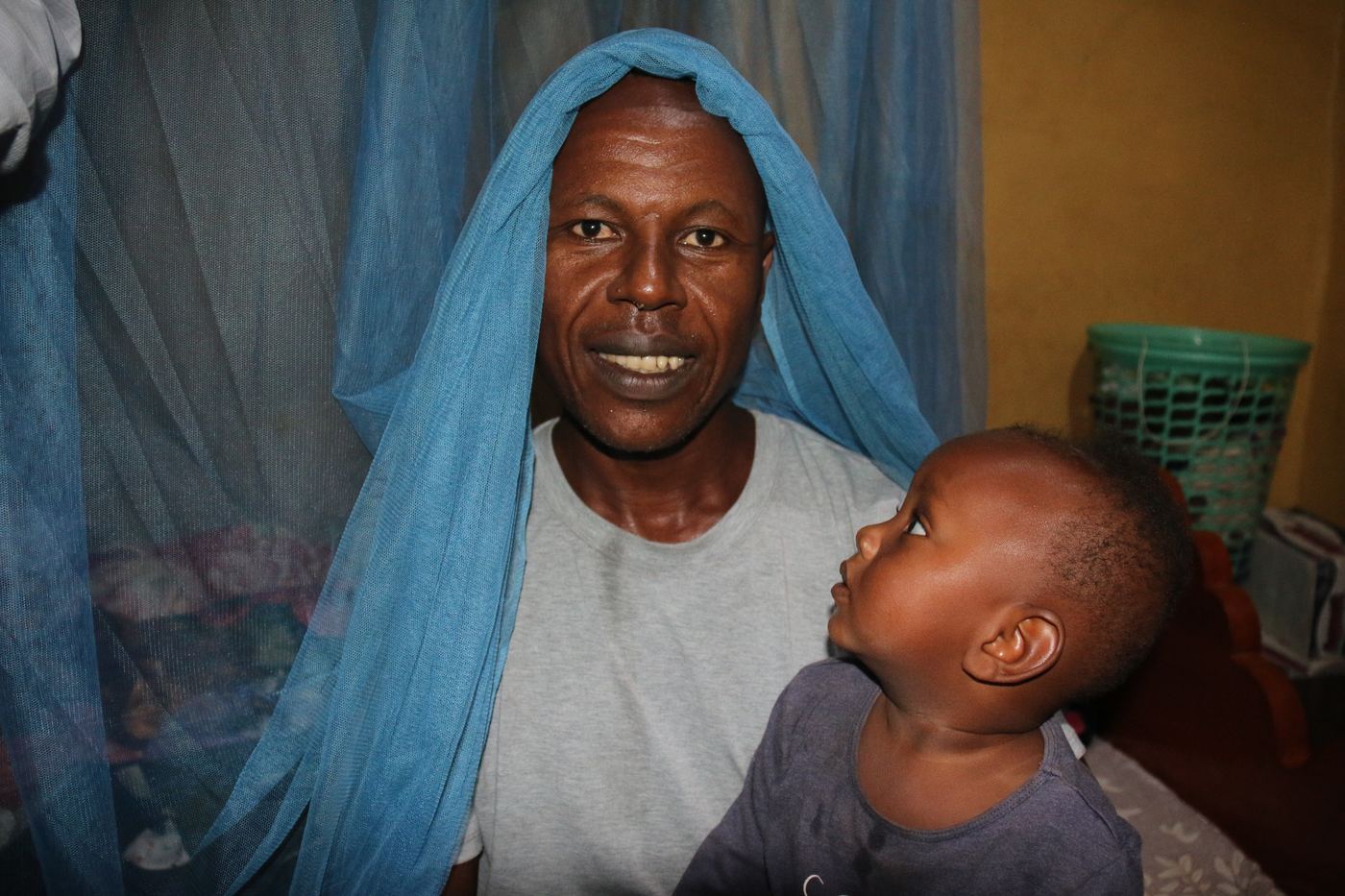
© WHO/Selamawit Joint malaria-vaccine and bed-net delivery, Ethiopia — primary health care and immunization, central to Alliance research.
Download the report (PDF)

Alliance for Health Policy
and Systems Research
and Systems Research
annual
report
2025
Alliance for Health Policy and Systems Research: annual report 2025
ISBN 978-92-4-012306-9 (electronic version)
ISBN 978-92-4-012307-6 (print version)
© World Health Organization 2026
(acting as the host organization for, and secretariat of, the Alliance for Health Policy and Systems Research)
Some rights reserved. This work is available under the Creative Commons Attribution-NonCommercial-ShareAlike 3.0 IGO licence (CC BY-NC-SA 3.0 IGO; https://creativecommons.org/licenses/by-nc-sa/3.0/igo).
Under the terms of this licence, you may copy, redistribute and adapt the work for non-commercial purposes, provided the work is appropriately cited, as indicated below. In any use of this work, there should be no suggestion that WHO endorses any specific organization, products or services. The use of the WHO logo is not permitted. If you adapt the work, then you must license your work under the same or equivalent Creative Commons licence. If you create a translation of this work, you should add the following disclaimer along with the suggested citation: "This translation was not created by the World Health Organization (WHO). WHO is not responsible for the content or accuracy of this translation. The original English edition shall be the binding and authentic edition".
Any mediation relating to disputes arising under the licence shall be conducted in accordance with the mediation rules of the World Intellectual Property Organization (http://www.wipo.int/amc/en/mediation/rules/).
Suggested citation. Alliance for Health Policy and Systems Research: annual report 2025. Geneva: World Health Organization; 2026. Licence: CC BY-NC-SA 3.0 IGO.
Cataloguing-in-Publication (CIP) data. CIP data are available at https://iris.who.int/.
Sales, rights and licensing. To purchase WHO publications, see https://www.who.int/publications/book-orders. To submit requests for commercial use and queries on rights and licensing, see https://www.who.int/copyright.
Third-party materials. If you wish to reuse material from this work that is attributed to a third party, such as tables, figures or images, it is your responsibility to determine whether permission is needed for that reuse and to obtain permission from the copyright holder. The risk of claims resulting from infringement of any third-party-owned component in the work rests solely with the user.
General disclaimers. The designations employed and the presentation of the material in this publication do not imply the expression of any opinion whatsoever on the part of WHO concerning the legal status of any country, territory, city or area or of its authorities, or concerning the delimitation of its frontiers or boundaries. Dotted and dashed lines on maps represent approximate border lines for which there may not yet be full agreement.
The mention of specific companies or of certain manufacturers' products does not imply that they are endorsed or recommended by WHO in preference to others of a similar nature that are not mentioned. Errors and omissions excepted, the names of proprietary products are distinguished by initial capital letters.
All reasonable precautions have been taken by WHO to verify the information contained in this publication. However, the published material is being distributed without warranty of any kind, either expressed or implied. The responsibility for the interpretation and use of the material lies with the reader. In no event shall WHO be liable for damages arising from its use.
Cover photo. © WHO/Selamawit. Joint delivery of malaria vaccines and insecticide-treated bed nets, Ethiopia. A father and his child shelter under a bed net distributed during the joint campaign – illustrating how primary health care systems deliver integrated, community-level prevention at scale.
Contents
- Letters from leadershipiv
- Where we work1
- Evidence and reach3
- Engagement and impact4
- Stories of change6
- Key reads from the year15
- Transforming health systems to achieve universal
health coverage through primary health care18 - Harnessing digital transformation to improve health24
- Preventing noncommunicable diseases by
addressing risks and determinants28 - Strengthening health systems resilience and
realizing co-benefits for climate action32 - Preparing health systems for emergencies
through a systems approach35 - Aligning national and regional knowledge ecosystems
for evidence-informed policy-making39 - Engaging strategically43
- Donors and governing bodies46
Letters from leadership
From the Board Chair
2025 has been a turbulent year for global health. A sharp contraction in development assistance from the United States of America, European and other partners has had significant impacts. Many countries now face the prospect of sustaining essential health services with reduced external funding.
Yet amidst this uncertainty, the Alliance has demonstrated that it can be a force for progress in global health and not a bystander. Its work in 2025 – reflected across its 109 projects in 41 countries and territories – shows evidence of real impact where it matters most: in policy decisions, in changed practice, and in shifts in thinking about how health systems work.
Consider the response to the health financing crisis. In March, the Alliance convened stakeholders in Geneva, Switzerland, to explore how countries could best respond to health financing cliffs – the sudden reductions in external aid that threatened service continuity. That dialogue became the foundation for a new programme of work, supported by the Wellcome Trust, on sustainable health financing transitions. This is precisely what the Alliance should be doing: identifying emerging challenges, generating evidence quickly and working with partners to identify the actions required to respond.
This year, the Alliance's work contributed to tangible changes in how countries approach health systems challenges. The Secretariat documented 31 instances where Alliance-supported research informed policy decisions, changed practice, built connections or shifted how stakeholders understand health challenges. After Alliance-supported research and cross-country dialogue on how governance gaps had constrained pandemic responses, Sri Lanka began incorporating findings into its National Policy on Health and Wellbeing (2026–2035) and designing a new Centre for Disease Control with a single coordinating mandate. In India, a pilot that began as a small Alliance-funded study more than a decade ago has now been taken up by a state government programme in Karnataka, placing tribal health navigators in facilities across five districts. This is what evidence-informed change looks like.

As I look ahead, I am convinced that the Alliance's strategy has kept it on the right track. The challenges facing global health are formidable, but so is the Alliance's record of turning evidence into action. By staying focused on what countries need and by building partnerships that last, the Alliance will continue to play an important role in strengthening health systems worldwide.
Rt Hon. Helen Clark
Board Chair
Board Chair
Letters from leadership
From the Executive Director
The tremendous changes in 2025 had major implications for our field of health policy and systems research. The rupture in the international order, dramatic reductions in aid funding, including for health policy and systems research, and accelerating damage to health from conflict and climate change challenge the field to ensure it is relevant to the health risks of today. At the Alliance, we have reflected on whether our recently developed 2024–2028 strategy is aligned to this changed context.
We can be pleased that workstreams within our strategy have been able to address most of these new crises. Building on our previous work on health financing and donor transitions, we were able to launch a new programme of work in 2025 specifically to support countries to manage the new health financing cliffs. Our work on service delivery in conflict situations in Somalia, Yemen and Ukraine proceeded well and attracted new interest. We deepened our work on climate and health by introducing new systems thinking projects in Nepal and Uganda. And we confirmed a programme of work on digital health wallets in three countries to be launched in 2026.
Beyond work on the crises and rapid transformations of our world, there was significant progress across the rest of the Alliance's portfolio. Two other new initiatives were launched: the Big Catch-up case studies and provider payment models for primary care. We expanded implementation research on noncommunicable diseases to eight countries, continued to build institutional capacity-strengthening initiatives across East and West Africa, and supported Nigeria's commitment to research-informed health financing reform.
At the same time, the new context deepens the imperative for the Alliance to "aim for impact" and rethink how to capture and demonstrate this. Our field has often measured success by counting outputs like journal publications. In this new world, we need to think differently – to track not just what we produce, but what it achieves: whether our work influences policy, changes practice and strengthens health systems. This report presents some of these stories of that change. We also need to communicate differently – so, to start, we are reaching new audiences through the Alliance Lift podcast and making evidence more accessible through an AI-powered search tool for health policy and systems research.

In this uncertain era, our purpose must be to ensure health policy and systems research fulfils its tremendous potential to guide countries with the evidence to overcome complex health challenges and to support countries to strengthen their domestic capacity to enable such research. I am grateful to our Board, our Scientific and Technical Advisory Committee, our Policy-Maker Forum, our funding partners, our researchers, and our Secretariat team for all their work in 2025 to fulfil this purpose.
Dr Kumanan Rasanathan
Executive Director
Executive Director
Where we work
Where we work
20
initiatives across seven areas of work
109
projects
41
countries and territories
Projects by country and area of work
Where we work
Areas of work and initiatives
| Area of work and initiative | Countries/territories | Projects |
|---|---|---|
| 1. Transforming health systems to achieve universal health coverage through primary health care | ||
| Big Catch-up case studies | 5 | 5 |
| Embedded implementation research for immunization programmes (MAINSTREAM) | 6 | 25 |
| Exploring pathways from primary health care (PHC) for universal health coverage (UHC) in India | 1 | 3 |
| Fostering approaches to model and measure impact of health system strengthening interventions | 3 | 3 |
| Health financing cliffs | 4 | 4 |
| HPSR to address vaccine uptake | 6 | 6 |
| Improving noncommunicable disease outcomes through implementation research | 8 | 8 |
| Provider payment for primary care | 6 | 6 |
| 2. Harnessing digital transformation to improve health | ||
| Digital interventions to support PHC managers in low- and middle-income countries (LMICs) | 8 | 10 |
| 3. Preventing noncommunicable diseases by addressing risks and determinants | ||
| No active research projects in this area | – | – |
| 4. Strengthening health systems resilience and realizing co-benefits for climate action | ||
| Applying HPSR to the climate crisis at country level | 6 | 6 |
| Improving climate and health through systems thinking | 2 | 2 |
| 5. Preparing health systems for emergencies through a systems approach | ||
| Governance of national public health agencies (NPHAs) | 11 | 12 |
| Health systems resilience in conflict-affected settings | 3 | 6 |
| 6. Aligning national and regional knowledge ecosystems for evidence-informed policy-making | ||
| Partnerships for stronger knowledge systems in Africa (KNOSA) – East Africa | 4 | 4 |
| Partnerships for stronger knowledge systems in Africa (KNOSA) – West Africa | 4 | 4 |
| 7. Engaging strategically | ||
| Alliance policy-maker forum | 11 | 1 |
| Thinker in residence | 1 | 1 |
| Health systems 2050 | – | 1 |
| Artificial intelligence in HPSR | – | 1 |
| State of HPSR | – | 1 |
Evidence and reach
Evidence and reach
Publications, citations and knowledge sharing
35
outputs
in 2025
in 2025
30 journal articles, 5 project documents · 1186 total since 1999
20 449
citations
in 2025
in 2025
~93 000 cumulative
100%
of 2025
outputs are open access
outputs are open access
Every output freely readable
Citations received per year
2025 outputs by area of work
Diversity in 2025 publications: a majority of lead authors were female; authorship spanned researchers based in low- and middle-income countries; and a substantial share of publications were grantee-led.
Engagement and impact
Engagement and impact
Events, convenings and media
48
events and
convenings
convenings
In 17 countries on four continents
49%
women
participants*
participants*
*events with reported participant data
Formats
Convenings, meetings, side events
23
Workshops, forums, consultations
14
Webinars
11
Locations
In-person
26
Online
19
Hybrid
3
Main in-person locations: Geneva, Kampala, Addis Ababa, Accra.
Events and convenings by area of work
Reach and amplification
7
Alliance Lift
podcast episodes
podcast episodes
25
external news
articles
articles
48 800+
website
visitors
visitors
9 800+
LinkedIn
followers
followers
Understanding impact
Understanding impact
Five dimensions of change
The Alliance tracks impact across five interconnected dimensions. Each contributes to how research translates into stronger health systems.
31
documented instances of change in 2025
Types of change documented
Instances of change documented in 2025, by dimension: Informing policy and processes (15), Changing practice (7), Shifting the frame (3), Building connections (6), Strengthening skills (not separately quantified). Total: 31 instances of change documented across five dimensions.
Informing policy and processes
15
Influencing policy decisions and formal processes.
Changing practice
7
Supporting changes in actual service delivery and health system operations.
Shifting the frame
3
Reframing how stakeholders understand health challenges and solutions.
Building connections
6
Creating and strengthening partnerships within and across countries and territories.
Strengthening skills
–
Supporting institutions to generate, apply and implement health policy and systems research.
Instances of change by area of work
Instances of change in 2025 by area of work: Transform (20), Harness (3), Prepare (3), Align (3), Prevent (1), Strengthen (1). Engage area produced strategic outputs but no separately counted instances.

Stories of change
Behind the numbers in this report are longer stories of how research becomes change. These four examples – drawn from across the Alliance's areas of work – show what happens when evidence meets political will, institutional commitment and community ownership. Longer versions of all stories are available via our Impact explorer.
© WHO
Vaccinators during Pakistan's national polio campaign. See the MAINSTREAM story for new evidence on embedded research for immunization, including findings from Pakistan.
Stories of change
MAINSTREAM · embedded research for immunization across six countries
Millions of children are missing routine vaccinations. Vaccines exist; what programmes struggle with is identifying who is being missed and adapting in real time. What if the evidence could be generated inside the programme itself?
Overview
Across six countries, 25 embedded research teams worked with immunization programmes to generate and apply evidence in real time. Through the Institutionalizing learning by mainstreaming embedded implementation research in country immunization programmes (MAINSTREAM) initiative (2023–2025), supported by Gavi, the Vaccine Alliance, short-cycle implementation research led to measurable improvements: vaccination adherence rose from 64% to 85% in Ebolowa district, Cameroon; response times to zero-dose alerts fell from ten days to three in Lahore, Pakistan; and service acceptability increased from 56% to 86% in Madagascar after clinic hours were adjusted to match caregivers' routines.
64→85%
vaccination adherence, Ebolowa, Cameroon
10→3 days
response time to zero-dose alerts, Lahore, Pakistan
56→86%
service acceptability, Madagascar, after clinic-hour changes
MAINSTREAM · story of change
The challenge
Millions of children in Cameroon, Ghana, Madagascar, Malawi, Mozambique and Pakistan are missing routine vaccinations. Vaccines exist; the persistent challenge is identifying zero-dose and underimmunized children and adapting delivery strategies in real time. Routine data systems are often incomplete. Researchers and programme managers frequently operate separately. By the time findings from conventional research become available, opportunities for timely action may have passed.
The Alliance's contribution
Supported by Gavi, the Vaccine Alliance, and in collaboration with WHO’s Department of Immunization, Vaccines and Biologicals (IVB), the Alliance integrated short-cycle, locally led implementation research within national immunization programmes, working through six national mentor institutes. It convened immunization managers, community representatives, researchers and civil society actors to jointly define priority questions, then supported 25 mixed teams of researchers and implementers to investigate them within routine programme timelines.
The result
In Cameroon, short message service (SMS) appointment reminders combined with digitalized vaccination schedules increased adherence from 64% to 85%, reaching nearly 3300 previously missed children. In Pakistan, a digital monitoring tool reduced response times to zero-dose alerts from ten days to three. In Madagascar, adjusting clinic hours to align with caregivers' daily routines increased acceptability from 56% to 86%. In Malawi, geospatial mapping identified clusters of unvaccinated children for the first time, and research on human papillomavirus (HPV) vaccination found that 92% of eligible girls had interacted with health services but were never offered the vaccine – a delivery gap, not a demand problem.
Beyond individual results, MAINSTREAM demonstrated that immunization programmes can develop the capacity to generate and use evidence iteratively. Priority-setting in all countries identified more questions than resources could support, indicating strong demand for embedding research as a core programme function.
Stories of change
Tribal health navigators · Karnataka, India
In tribal communities of India's Karnataka state, health navigators drawn from the community itself are bridging the distance between Adivasi communities and the care they are entitled to.
Overview
In Chamarajanagar district, southern Karnataka, India, indigenous Adivasi communities – particularly the Soliga people – have long faced some of the poorest health outcomes in the state, driven by structural barriers to access dignified health care services. In 2014, a participatory action research project funded by the Alliance brought together researchers from the Institute of Public Health Bengaluru (IPH), a local nongovernmental organization (NGO) and a federated Soliga people's collective to identify community-driven solutions. The result was the tribal health navigator model: trained Adivasi nurses stationed in hospitals to guide patients through the system. From a small pilot in one district over a decade ago, the model has grown into a government-funded programme operating in five districts today, with state budget allocations in 2025 for further expansion.
2200+
Adivasi patients assisted by navigators by December 2025
5 districts
covered by the state-funded programme
₹1 crore
annual budget allocated by Karnataka government (≈US$ 120 000)
The challenge
The Soliga people – an Adivasi (indigenous) community of around 30 000 across 148 villages in Chamarajanagar district, southern Karnataka, India – face some of India's starkest health inequities: for example, 46% of indigenous women are underweight and 57% are anaemic. Many Soliga patients leave hospitals without completing treatment. As one community elder put it: "In hospital they say a hundred things like go here and there, get the token, letter, get sign here – we don't know all those things."
Tribal health navigators · story of change
The Alliance's contribution
The Alliance's Implementation research platform funded an unusual proposal: participatory action research led by a community health implementer, in partnership with the Zilla Sangha, a federated Soliga indigenous people's collective. Over the course of two years, field investigators from the Soliga community visited the villages. At a deliberative workshop, community leaders identified that the core problem was the system itself. Their solution: "The person navigating has to be one of ours." The Alliance's contribution went beyond the grant – its requirement for an implementer as principal investigator shaped the partnership model, and the Alliance lent credibility in policy spaces.
The result
More than a decade later, the navigator model is state policy. In 2023, the Karnataka government launched a three-year trial across five districts. By December 2025, more than 2200 Adivasi patients had been assisted by navigators. In September 2025, the state government issued an order institutionalizing the tribal health navigator programme, allocating an annual budget of ₹1 crore (approximately US$ 120 000) for its implementation across five pilot districts. Incorporating learnings from the pilot phase, the programme now features formal implementation guidelines, increased honorarium for navigators, a dedicated public health professional to oversee operations and an expanded workforce based on recent assessments.
The initial seed grant also catalysed a research trajectory: a Department of Biotechnology/Wellcome Trust India Alliance fellowship, a multistate study on innovative primary health care approaches in India, and IPH's new Centre of Adivasi Health, which now employs some 50–60 Adivasi people. As the original principal investigator, Dr Tanya Seshadri, reflected: "That pilot and those initial conversations were like a seed. It spiralled into so many different things. Today this is a story owned by the navigators themselves and by the community leaders."
Stories of change
Implementing a sugar-sweetened beverage tax · Evidence supports action in Ghana
Ghana's sugar-sweetened beverage tax shows what happens when local researchers generate the evidence a government needs to act.
Overview
In March 2023, Ghana's Parliament passed the Excise Duty (Amendment) Bill, imposing a 20% tax on sugar-sweetened beverages (SSBs) for the first time. Tax revenue rose from GH₵ 735 million in 2022 to GH₵ 1326 million in 2023 (roughly US$ 67 million to US$ 120 million). In the years preceding the bill, an Alliance-funded research project – supported by the Governments of Norway and Sweden – at the Kwame Nkrumah University of Science and Technology (KNUST) School of Public Health produced some of the first peer-reviewed evidence on stakeholder and public perceptions of health taxes in Ghana, suggesting that they are reframed as a health intervention rather than a purely fiscal measure, and challenging an assumption that the public would oppose them.
20%
tax on sugar-sweetened beverages (2023)
GH₵ 735 → 1326m
tax revenue, 2022 to 2023 (≈US$ 67 → 120m)
19
stakeholder interviews informing the evidence base
The challenge
Noncommunicable diseases account for nearly 43% of all-cause mortality in Ghana, with overweight and obesity rising steadily. SSB sales grew from 446 million litres in 2017 to 542 million litres in 2022, yet SSBs had never been taxed. The evidence base in Ghana was thin – policy-makers understood that noncommunicable diseases were rising but many did not fully grasp the scientific rationale connecting health taxes to reduced consumption.
Ghana SSB tax · story of change
The Alliance's contribution
Through its research programme on health taxes – supported by the Governments of Norway and Sweden – the Alliance funded a team with experience in tobacco control research and with established relationships with the Ghana Revenue Authority and the Ministry of Health – alongside international partners and a local civil society organization, VAST-Ghana. Between June and October 2022, before the bill reached Parliament, the team conducted 19 stakeholder interviews and five focus group discussions, plus workshops in Accra with customs officials, the Food and Drugs Authority and ministry representatives. The Alliance's connection to the WHO country office helped secure participation of key policy-makers. Findings were shared through stakeholder engagement even before the two peer-reviewed publications appeared.
The result
The research mapped Ghana's political landscape around health taxes for the first time, identifying barriers – industry–political links, lack of local evidence, concerns about accountability – and concrete opportunities for reform. The public perception study revealed near-universal support for SSB taxes when framed as health interventions with earmarked revenue, confronting assumptions about public opposition. The Advocating for Ghana's Health Coalition drew on locally generated evidence during a parliamentary process in which industry actors submitted a record 17 petitions against the bill.
The Act passed on 31 March 2023. In 2025, a capacity-building project to strengthen enforcement is now under way. The government has maintained the taxes, and their revenue has become particularly valuable in light of the sharp drops in external assistance. The research contributed one strand of evidence within a wider coalition effort but it was a strand that had not previously existed.
Stories of change
Governance of national public health agencies · Eleven countries build a community of practice
When COVID-19 exposed gaps in how countries govern their health emergencies, a key question became: how should national public health agencies (NPHAs) be structured to prepare for the next crisis?
Overview
NPHAs are the institutions that provide science-based leadership, technical expertise and coordination for public health functions across a full range of health emergencies. The COVID-19 pandemic brought intense scrutiny to these agencies and exposed governance gaps that had constrained their ability to act yet there was little comparative evidence on what effective NPHA governance looks like. Through a multicountry learning programme convened by the Alliance and WHO's Health Emergencies Programme (WHE), with support from the Government of Germany, research teams in 11 countries have been examining how governance arrangements shape their emergency responses, systematically documenting knowledge that had remained largely unwritten. At a meeting in Addis Ababa, Ethiopia, they identified four governance dimensions that determine NPHA effectiveness and generated evidence that is already informing institutional reforms.
11
countries in the multicountry learning programme
4
governance dimensions identified as determinants of NPHA effectiveness
2026–2035
Sri Lanka National Policy on Health and Wellbeing already reflecting findings
The challenge
NPHAs take many forms, from centres for disease control to departments within ministries of health, and they respond to a range of threats from disease outbreaks to climate-related health crises. Yet, many operate under governance arrangements that constrain their effectiveness.
NPHA governance · story of change
The COVID-19 pandemic made this visible at scale. In Pakistan, devolution left the National Institutes of Health struggling to enforce coordination nationally. In Fiji, outdated legislation – some dating to the 1930s – had to be amended mid-outbreak. Across countries, NPHAs found their legal mandates unclear, their coordination mechanisms untested, and their financing dependent on emergency funds that required approvals, delaying response. Leaders held deep practical knowledge of what worked and what held them back – but it had never been systematically captured across countries.
The Alliance's contribution
The Alliance and WHE – whose NPHA governance work is supported by the Government of Germany – convened research teams from Algeria, Brazil, Ethiopia, Fiji, Germany, Japan, Pakistan, the Republic of Korea, Rwanda, Singapore and Sri Lanka – bringing together NPHA staff, researchers and ministry officials. The Alliance provided funding, technical support and convening power, enabling teams to turn practical experience into structured evidence and compare findings across very different health systems. For many, it was the first time these questions had been systematically investigated. The programme design fostered cross-country learning that no single national study could have achieved alone.
The result
The research identified four governance dimensions that determine whether NPHAs can respond effectively: authority and coordination; autonomy and accountability; communication and public trust; and sustainable financing. Countries are already acting on the findings. Dr Mahendra Arnold, Deputy Director General of Public Health Services in Sri Lanka, noted that the "outcome of the study was timely", as its findings are already reflecting in the National Policy on Health and Wellbeing (2026–2035) as it is being drafted, and are shaping the design of a new National Center for Disease Control with a single coordinating mandate. Ethiopia is working to establish dedicated domestic financing so that core public health functions are maintained between emergencies. In the words of Dr Kumanan Rasanathan, the Alliance's Executive Director: "No country has all the answers, but together we have many of them."
Key reads
Key reads
Transform · Reforming health systems and services
- Edelman A, Marten R, Dhillon I, Suresh AG, Thamarangsi T, Grundy J, et al. Primary health care in the context of the COVID-19 pandemic in 10 South-East Asian countries: a cross-case synthesis with lessons for future health systems strengthening. BMJ Glob Health. 2025;10(Suppl 2):e018076. https://doi.org/10.1136/bmjgh-2024-018076.
- Edelman A, Vinyals Torres L, Kazi A, Rasanathan K, Marten R. An unfinished agenda: insights from seven country case studies on strengthening primary health care in the Western Pacific Region. BMJ Glob Health. 2025;10(Suppl 2):e017442. https://doi.org/10.1136/bmjgh-2024-017442.
- El-Jardali F, Ataya N, Edelman A, Zaidi S, Marten R, Salah H, et al. Role of a primary healthcare approach in COVID-19 pandemic response in the Eastern Mediterranean Region: multicountry case study synthesis. BMJ Glob Health. 2025;10(Suppl 2):e017700. https://doi.org/10.1136/bmjgh-2024-017700.
- Rasanathan K, Mak R, Chalkidou K. No shortcuts to universal health coverage: lessons from accountability initiatives. BMJ Glob Health. 2025;10(Suppl 6):e021074. https://doi.org/10.1136/bmjgh-2025-021074.
- Ismail A, Mathauer I, Akweongo P, Bolivar Vargas MC, Desai S, Raharja DP, et al. Making health insurance responsive to citizens: learning from six low- and middle-income countries. BMJ Glob Health. 2025;10(Suppl 6):e018176. https://doi.org/10.1136/bmjgh-2024-018176.
- Rasanathan K, Beltran MM, Biritwum-Nyarko AA, Blecher MS, Dybul M, Inoue H, et al. Navigating health financing cliffs: a new era in global health. Lancet. 2025;405(10493):1893–5. https://doi.org/10.1016/S0140-6736(25)00720-2.
- Ssegujja E, Kiggundu P, Karen SZ, Rutebemberwa E. Implementation context and stakeholder perspectives on routine immunization data among lower-level private for-profit providers in an urban setting: experiences from Kampala, Uganda. Health Res Policy Syst. 2025;23(1):112. https://doi.org/10.1186/s12961-025-01351-7.
Prevent · Tackling noncommunicable diseases
- Smith KE, Hellowell M, Logo DD, Marten R, Singh A. New health taxes in Ghana: a qualitative study exploring potential public support. Health Policy Plan. 2025;40(8):831–42. https://doi.org/10.1093/heapol/czaf042.
Key reads
Strengthen · Building climate resilience
- Wild K, Rasanathan K, Singh S, Woodward A. Balancing short-term and long-term climate-health equity strategies: a framework for supporting faster, fairer joint action on climate change and health equity. BMJ Glob Health. 2025;9(Suppl 1):e016094. https://doi.org/10.1136/bmjgh-2024-016094.
Prepare · Emergency preparedness and response
- Guerrero-Torres L, Shroff ZC, Hanefeld J, Lee VJ, Lynes S, Muvunyi C, et al. Governance and structure of national public health agencies: a critical foundation for strengthening public health security. BMJ Glob Health. 2025;10(5):e017724. https://doi.org/10.1136/bmjgh-2024-017724.
- Sasie SD, Ayano G, Girma M, Van Zuylen P, Aragaw FM, Darebo TD, et al. Development and validation of an assessment tool for public health emergency management program. Glob Health Res Policy. 2025;10(1):44. https://doi.org/10.1186/s41256-025-00423-z.
Align · Capacity strengthening
Recent outputs from researchers and teams whose capacity was built through prior Alliance investment — illustrating the long arc of capacity strengthening as a programmatic activity.
- Djore Torouka M. Contractualisation des formations sanitaires publiques au Togo: une approche susceptible d'améliorer le niveau d'accès aux services de santé? Rev Afr Sci Soc Santé Publique. 2025;7(2):106–20. https://doi.org/10.4314/rasp.v7i2.7.
- Sakana BLD, Meda ZC, Ilboudo B, Ouattara A, Konate B, Dabone BE, et al. Incidence of loss to follow-up and associated factors among mothers on antiretroviral therapy in the context of elimination of mother-to-child transmission of HIV in two health districts of Bobo-Dioulasso in Burkina Faso. BMC Womens Health. 2025;25(1):148. https://doi.org/10.1186/s12905-025-03658-7.
- Santosh S. En route to midwifery professionalisation: contextualising midwifery care in the Indian public health system. Community Health Equity Res Policy. 2025;46(3):321–36. https://doi.org/10.1177/2752535X251340760.
Key reads
Engage · Strategic initiatives and communication
- Rasanathan K, Cloete K, Gitahi G, Gómez-Dantés O, Saminarsih D, Swaminathan S, et al. Functions of the global health system in a new era. Nat Med. 2025;31(11):3605–8. https://doi.org/10.1038/s41591-025-03936-9.
- Guerrero-Torres L, Ismail A, Savedoff W, Sheikh K, Schleiff M. Enablers and barriers for policymaker engagement in health research from the perspective of policymakers: a scoping review. BMJ Open. 2025;15(8):e099720. https://doi.org/10.1136/bmjopen-2025-099720.
- Biermann O, Schleiff M, Romao DMM, Mikaelsdotter C, Alfvén T, Wanyenze RK, et al. Action towards connecting knowledge translation and implementation research. Lancet Glob Health. 2025;13(3):e403–4. https://doi.org/10.1016/S2214-109X(24)00522-9.
- Belrhiti Z, El Kirat H, Diallo D, Abdellah S, Dib K, Zbiri S, et al. Barriers and facilitators to the institutionalization and sustainability of knowledge translation platforms in the Eastern Mediterranean Region: a scoping review. Health Res Policy Syst. 2025;23(1):114. https://doi.org/10.1186/s12961-025-01363-3.

01 · Transform
Transforming health systems to achieve universal health coverage through primary health care
Supporting countries to strengthen primary health care systems and services to advance universal health coverage through locally driven research and evidence-informed change.
© WHO/Nathalie Ridgard
Oral cholera vaccination campaign, Blantyre District, Malawi – community-delivered primary health care at work.
Transform
Transform · in 2025
In 2025, the Alliance
- Supported 25 embedded implementation research projects through six mentor institutes via the MAINSTREAM initiative, providing tailored mentorship, protocol development and supervision.
- Launched three new programmes: Big Catch-up case studies, provider payment models for primary care, and research on health financing cliffs.
- Established global communities of practice and cross-country learning platforms on vaccine uptake, health systems modelling and noncommunicable disease implementation research.
- Documented policy uptake in India (tribal health navigators scaled to five districts), Nepal (task-sharing with female community health volunteers for noncommunicable disease management), and Ghana (integration of hypertension and diabetes care into HIV services).
Highlights
This is the Alliance's largest and most established area of work, supporting country-led research and policy engagement to strengthen primary health care as the foundation of equitable and resilient health systems. Work spans immunization, financing universal health coverage, primary care models and noncommunicable disease management.
Across 23 countries and territories, more than 60 studies were active in this area of work, with established programmes delivering results while new initiatives addressed emerging system challenges.
Transform
Immunization
Immunization research has been a cornerstone, spanning three complementary initiatives. In collaboration with WHO’s IVB department and with support from Gavi, the Vaccine Alliance, the Institutionalizing learning by mainstreaming embedded implementation research in country immunization programmes (MAINSTREAM) supported embedded implementation research across six countries, with mentor institutes guiding local research teams and strengthening collaboration with community organizations and health policy-makers.
The Big Catch-up case studies programme launched on an accelerated timeline, with teams in Cameroon, Nigeria, Pakistan, the United Republic of Tanzania and Yemen completing data collection and analysis within the year, followed by a cross-country synthesis workshop in Cairo, Egypt, to compare approaches to reaching zero-dose and underimmunized children.
The vaccine uptake research programme – supported by the National Institute for Health and Care Research – progressed to full implementation across Ethiopia, India, Indonesia, Nigeria, Pakistan and the Philippines, supported by a co-construction workshop in Geneva, Switzerland, and a learning forum co-hosted with Aga Khan University in Karachi, Pakistan. Together, these initiatives strengthened the evidence base and policy engagement around immunization as a core component of primary health care systems.
Transform
Health financing
A cross-cutting programme on managing health financing cliffs emerged in response to sharp reductions in external aid in 2025. Working with Ethiopia, Mozambique, Uganda and Cambodia, and in close collaboration with WHO's Health Financing and Economics team, the Alliance supported analysis of immediate country responses, fiscal space and political economy dynamics. The agenda was shaped through a senior policy meeting in March 2025 bringing together country policy-makers, development partners and WHO, followed by a side event at the World Health Assembly in Geneva, Switzerland. A Comment published in The Lancet helped focus attention on how governments were responding to health financing cliffs.
The provider payment research programme selected teams in Brazil, Ethiopia, India, Indonesia, the Islamic Republic of Iran and Kenya to examine how health workers can be effectively incentivized to deliver quality care.
In Nigeria, the Alliance has been supporting a national commitment to policy and implementation research to inform health financing reform, with the aim of increasing per-person health spending on the path to universal health coverage.
Transform
Primary care models
In India, the universal health coverage research consortium completed case studies in Jharkhand and Karnataka. Consortium members joined Karnataka's State Expert Committee on Urban Health, contributing to the reorganization of Bengaluru's health system, while the tribal health navigator programme was formalized and expanded (see story of change). The consortium also convened Ayushman Arogya Mandir symposia connecting policy-makers across north-eastern states.
A modelling initiative selected country teams in Ethiopia, Kenya and Indonesia to develop proof-of-concept models demonstrating how health systems strengthening interventions affect service delivery. These models were presented to national technical consortia, and in Indonesia are already being adapted into policy-relevant dashboards at national and provincial levels. A global community of practice was established with Health Systems Global, alongside webinars exploring different modelling approaches and a growing repository of tools.
Noncommunicable disease management
Research on noncommunicable disease management in primary health care expanded from four to eight countries, with all teams obtaining ethical approval and finalizing protocols. In Nepal, research from the previous studies on task-sharing for hypertension and diabetes management with female community health volunteers showed promising results and is being considered for national scale-up. In Ghana, a co-developed framework for integrating hypertension and diabetes care into HIV services has been prioritized for implementation by the Ministry of Health.
Transform
Transform · impact dimensions
Impact dimensions
Strengthening skills
More than 200 participants engaged in workshops, mentoring and peer exchange, strengthening capacities in implementation research, data analysis, modelling and communication. Mentor institutes under MAINSTREAM enhanced local embedded research capability.
Building connections
Collaboration among ministries of health, WHO offices, academic institutions and civil society strengthened across initiatives. The Big Catch-up and MAINSTREAM programmes fostered South–South learning, while modelling work connected researchers and policy-makers through national technical consortia. Noncommunicable disease research linked communities, providers and policy-makers in co-developing solutions.
Changing practice
Several country teams applied research findings directly to service delivery. As detailed in the MAINSTREAM story of change, across multiple settings, embedded implementation research led to measurable improvements in service delivery, including increased adherence to immunization schedules, more effective identification of zero-dose children and strengthened follow-up systems.
Informing policy and processes
In India, consortium members joined the State Expert Committee on Urban Health, shaping health system reforms in Bengaluru and have helped to institutionalize the tribal health navigator programme – as detailed in the longer story of change. In Nepal, findings on task-sharing for noncommunicable disease management are being considered for national scale-up. In Ghana, a framework for integrating hypertension and diabetes care into HIV services has been prioritized for implementation. Across Big Catch-up countries, research findings are being integrated into national immunization planning, while at global level, Alliance-led work is informing policy dialogue on sustaining health systems in the context of declining external financing.
02 · Harness
Harnessing digital transformation to improve health
Supporting research to understand how digital health – including artificial intelligence – can enhance service delivery, empower users and support better decision-making, and how countries can integrate these tools into national systems.
© WHO/Genna Print
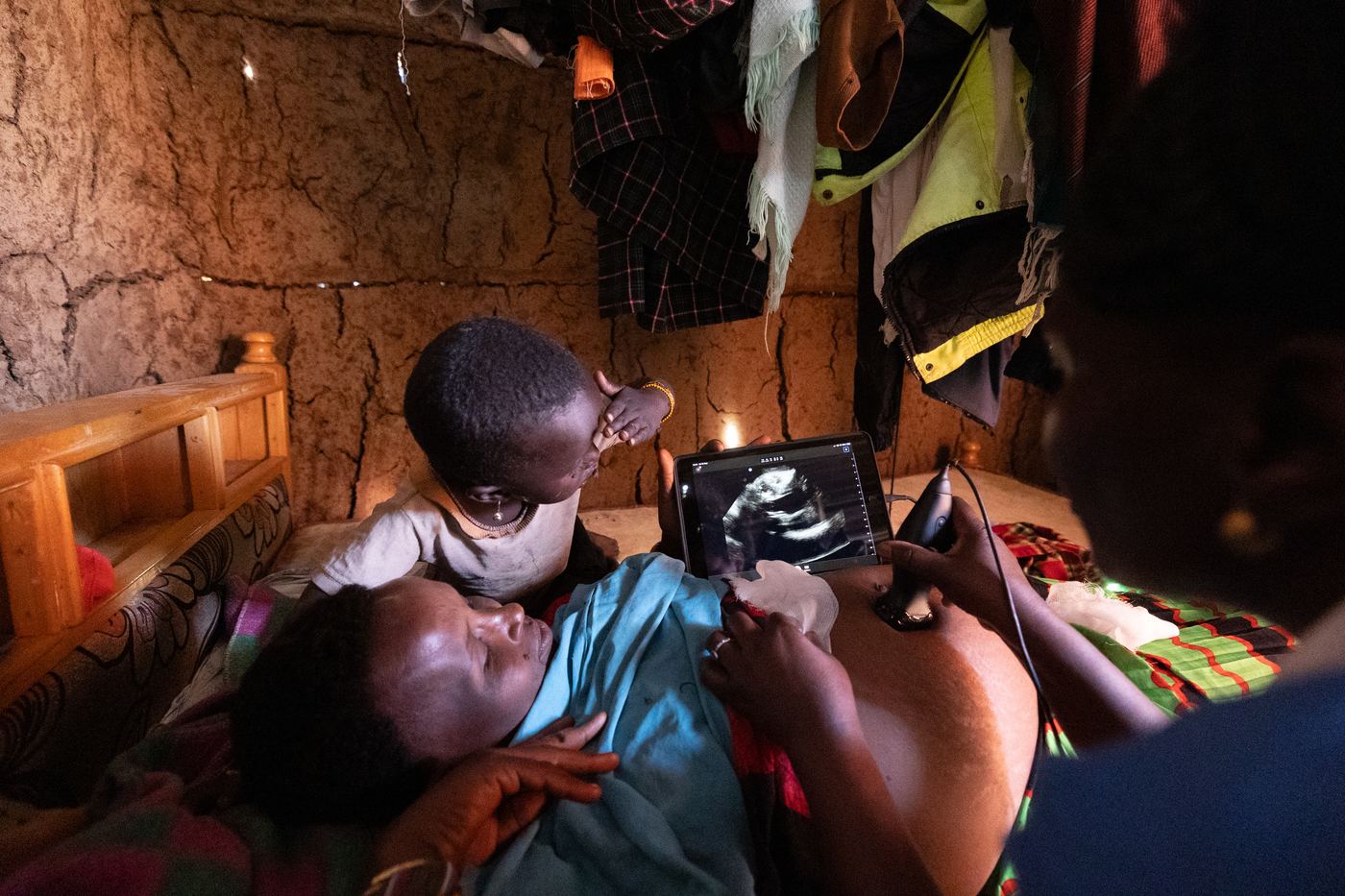
Phone-based ultrasound at a mobile outreach, Samburu County, Kenya – digital tools extending primary care to the last mile.
Harness
Harness · in 2025
In 2025, the Alliance
- Concluded ten country studies on digital interventions in primary health care.
- Convened major engagement events in New Delhi, India, and Nairobi, Kenya, with national policy-makers and international stakeholders.
- Made the case for digital health as a systems challenge rather than a technology challenge.
Highlights
Ten studies concluded in 2025 across eight countries – three in India, with one each in Bhutan, Ethiopia, Georgia, Ghana, Indonesia, Pakistan and Zimbabwe – generating evidence on how digital interventions affect the performance, equity and resilience of primary health care systems.
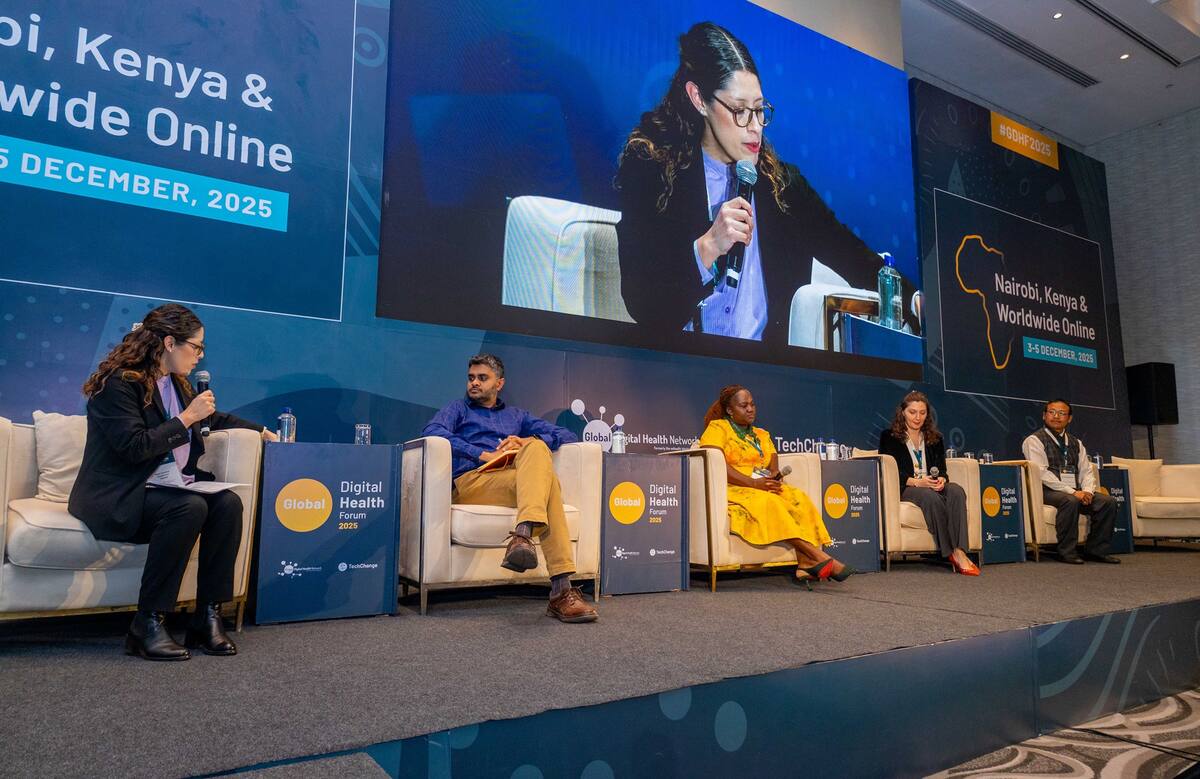
As the studies concluded, the focus shifted toward research uptake and policy engagement. The Alliance convened a national engagement meeting in New Delhi, India, and a side event during the World Health Summit Regional Meeting, bringing together decision-makers, researchers and digital health experts from study countries. A further session at the Global Digital Health Forum in Nairobi, Kenya, connected regional policy-makers and international stakeholders on digital health governance and implementation.
Harness
Fragmented digital systems, in a range of contexts, mostly made frontline workers' lives harder: duplicated reporting, more screens, more workload. The tools that worked were the ones built into how care was already being delivered — supporting daily decisions, joining teams up, and helping reach the people the systems were meant to serve. Where digital tools sat alongside existing services rather than within them, they were often the first to be set aside, no matter how well designed.
"Technology is probably less than 20% of the problem. If you digitize broken systems, you'll end up with a broken digital system."
– Rubayat Khan, Director of Health Programmes, Endless Health, and Alliance Board member, at the Global Digital Health Forum in Nairobi, Kenya
Harness
Harness · impact dimensions
Impact dimensions
Shifting the frame
The programme is making the case for treating digital transformation in health as a systems challenge rather than a technology issue. Findings emphasize that digital tools should strengthen decision-making, service delivery and user empowerment within primary health care, and reveal unintended consequences of fragmented and supply-driven approaches – including duplication of reporting and increased health worker workload – reinforcing the case for integrated, interoperable and user-centred systems.
Building connections
Partnerships among researchers, implementers and policy-makers were strengthened through cross-country learning and peer exchange. Engagement meetings in New Delhi, India, and Nairobi, Kenya, deepened collaboration between ministries of health, WHO country offices and digital health stakeholders, supporting more coordinated approaches to system integration and governance.
Changing practice
In India, engagement with state-level authorities initiated concrete efforts to align digital health tools with national strategies, strengthen integration across platforms, and address operational bottlenecks, including postnatal care tracking and the rationalization of parallel reporting systems to reduce the workload of frontline workers.
Informing policy and processes
In Zimbabwe, research findings informed the evaluation of national electronic health record systems, contributing evidence to ongoing efforts to assess system performance and guide future digital health investments. In Bhutan, study findings informed updates to the national eHealth strategy. Across countries, the evidence triggered policy dialogue on digital health governance, interoperability, infrastructure investment and workforce capacity-building, helping to shape more integrated and sustainable approaches to digital transformation.
03 · Prevent
Preventing noncommunicable diseases by addressing risks and determinants
Supporting research to prevent premature death and disability from noncommunicable diseases, focusing on primary prevention, commercial determinants, and fiscal measures such as health taxes to advance health equity.
© WHO
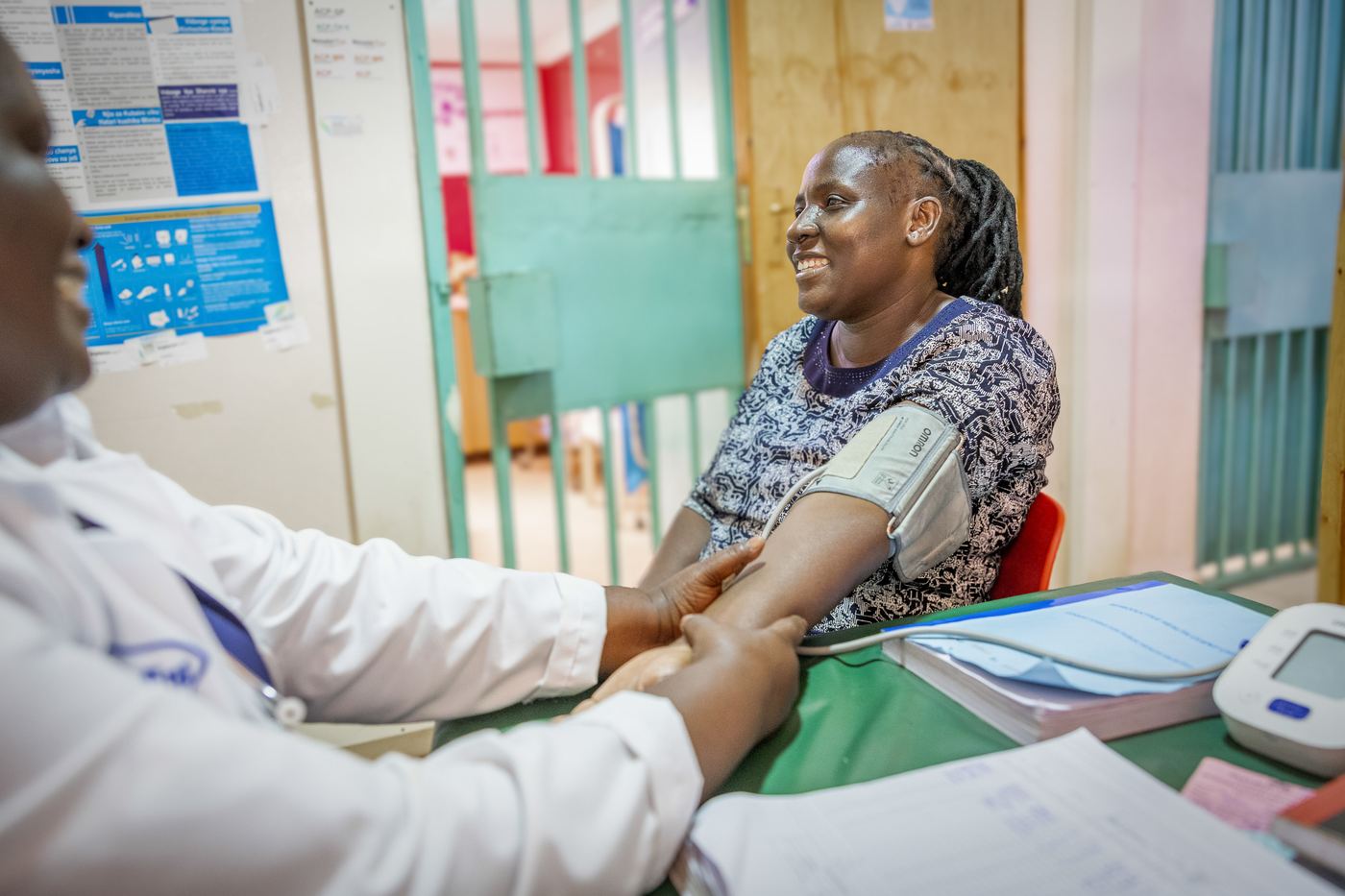
Women's Integrated Cancer Services, Kenya – a single visit combining cancer screening with noncommunicable disease and mental-health checks.
Prevent
Prevent · in 2025
In 2025, the Alliance
- Laid the foundations for a new multicountry research initiative supported by the Robert Wood Johnson Foundation on equity in health research.
- Convened a World Health Assembly side event on health taxes implementation.
- Supported high-level policy dialogue with heads of state and ministers at a side event during the United Nations General Assembly on expanding the implementation of health taxes.
- Contributed to the development and launch of WHO's 3x35 health taxes initiative, helping embed research and learning at the core of a major global policy framework.
Highlights
The Alliance contributed to the development and launch of WHO's 3x35 initiative – a global effort to raise the real prices of tobacco, alcohol and sugar-sweetened beverages by at least 50% by 2035 through health taxes, with the aim of reducing noncommunicable disease deaths and generating public revenue. Through its engagement, the Alliance helped ensure that research and learning are part of the initiative, supporting countries to translate policy commitments into sustained implementation.
Prevent
Building on earlier work, the Alliance continued to elevate health taxes on global policy agendas. This included convening a side event at the World Health Assembly in Geneva, Switzerland, and supporting high-level dialogue at the United Nations General Assembly in New York, United States of America, including a breakfast meeting focused on expanding implementation.
The Alliance also laid the groundwork for a new programme of work on health taxes beginning in 2026, alongside a broader initiative on health equity research developed in partnership with Washington University's School of Public Health in St. Louis and supported by the Robert Wood Johnson Foundation. These efforts deepened the Alliance's contribution to global approaches to health taxes and their implementation.
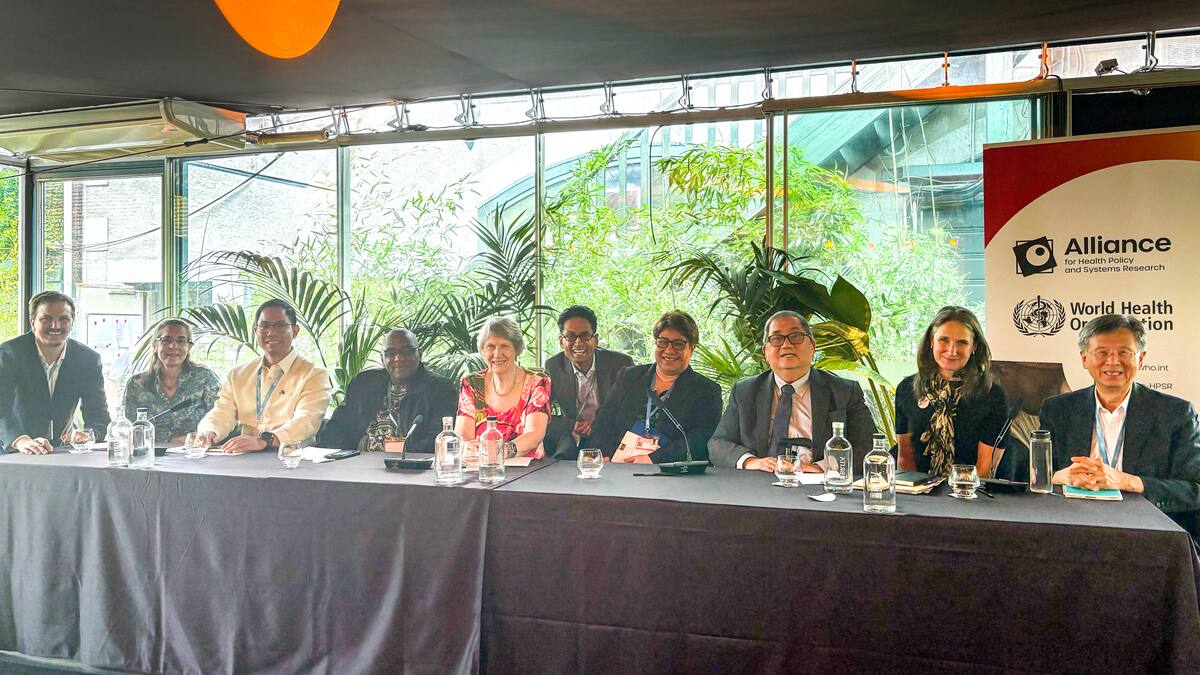
"They raise money, they save lives, and they reduce pressure on overstretched health systems. Health taxes are one of the smartest investments a government can make."
– Rt Hon. Helen Clark, Chair of the Alliance Board, at the World Health Assembly side event on health taxes
Prevent
Prevent · impact dimensions
Impact dimensions
Shifting the frame
The Alliance's work on health taxes contributed to shifting how stakeholders understand the political economy of taxation for health. Evidence from Ghana highlights that public and political acceptability depends not only on technical design but also on trust, framing and visible benefits. Linking taxes to health and social outcomes, and engaging communities in context-sensitive ways, can strengthen legitimacy and public support. More broadly, this work continues to move the field beyond narrow economic modelling toward a political-economy and social-framing perspective (see story of change on Ghana).
04 · Strengthen
Strengthening health systems resilience and realizing co-benefits for climate action
Integrating health into climate mitigation and adaptation strategies, helping countries identify actions and bridge the gap between health systems and climate action.
© WHO
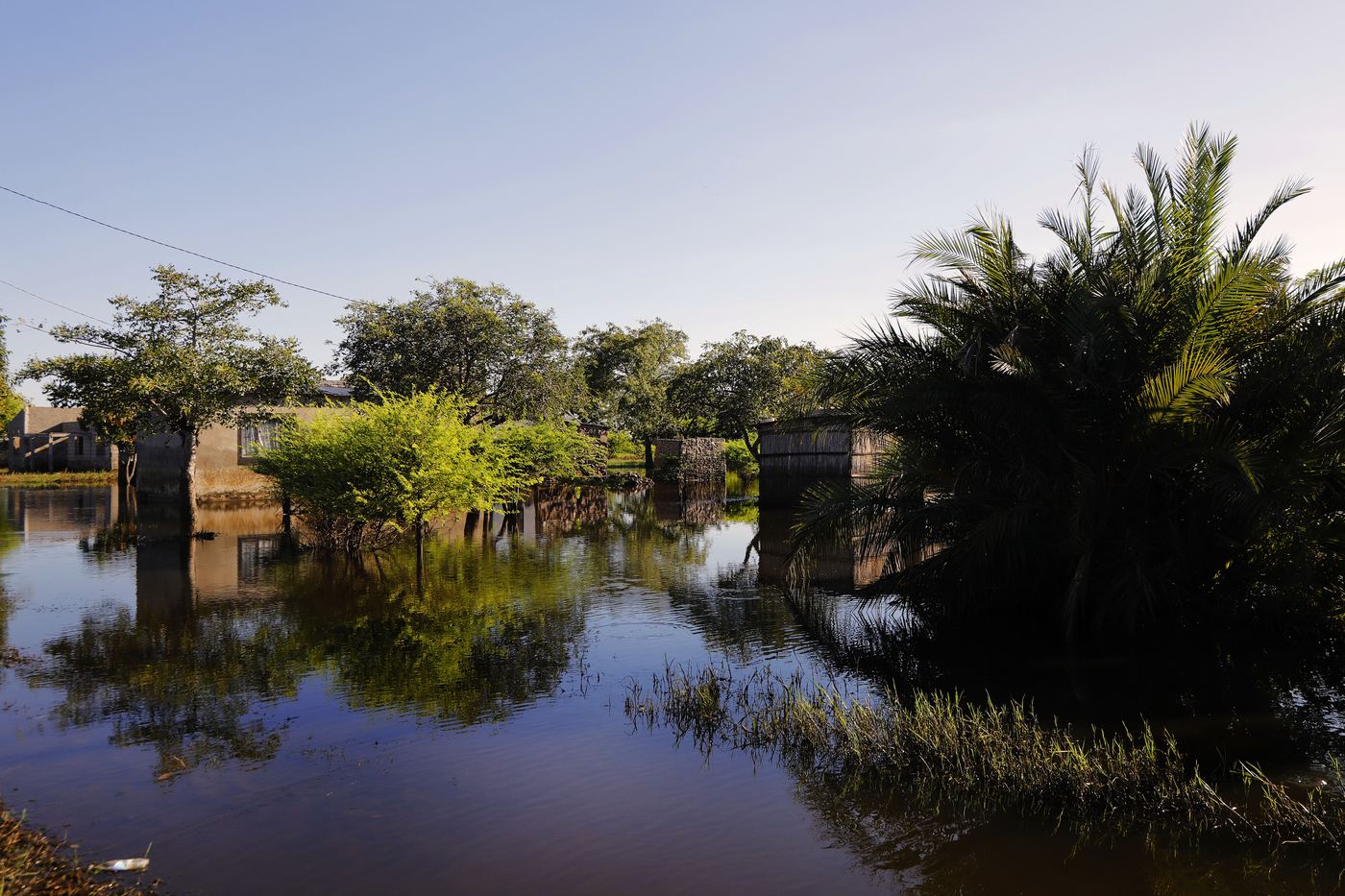
Floodwaters near Chókwè Rural Hospital, Mozambique – climate shocks are already straining frontline facilities.
Strengthen
Strengthen · in 2025
In 2025, the Alliance
- Completed six country studies on climate and health resilience across diverse settings.
- Launched two new systems-thinking projects in Nepal and Uganda to support national climate and health adaptation planning.
- Produced new evidence on climate-resilient and low-carbon health systems, including a framework on balancing short- and long-term climate–health equity strategies.
- Strengthened cross-country learning through virtual workshops and peer exchange on systems-thinking approaches.
Highlights
This area of work supports countries to adapt health systems to the climate crisis through applied research and policy engagement, with a focus on climate-resilient and low-carbon health systems and the use of systems thinking in national planning.
Six country studies were completed across Argentina, India, Pakistan, occupied Palestinian territory, including east Jerusalem, the United Republic of Tanzania and Uganda. These studies generated context-specific evidence on how health systems can respond to climate risks, with multiple manuscripts submitted to a special collection on climate-resilient and low-carbon health systems.
Strengthen
In several countries and territories, research teams engaged senior policy-makers interested in using findings to inform national climate and health planning, helping position the work within ongoing policy discussions.
Two new research initiatives were launched in Nepal and Uganda to apply participatory systems-thinking approaches to climate and health planning. In Nepal, the research team mapped key stakeholders, conducted interviews and completed three of six participatory system mapping and solution design workshops. In Uganda, a two-day multisectoral workshop produced a working definition of a climate-smart health workforce, actor maps and draft causal loop diagrams identifying key system barriers and enablers.
A virtual cross-country workshop in October 2025 brought the Nepal and Uganda teams together for peer exchange on methods and early findings, strengthening shared learning on how systems thinking can be applied in climate and health contexts.
Strengthen · impact dimensions
Building connections
Participatory approaches in Nepal and Uganda strengthened collaboration between researchers, ministries of health and actors from other sectors. In Uganda, the establishment of the Complexity, Innovative Research and Evaluation Methodologies (CIREM) Hub extended the reach of the work through institutional visibility and ongoing knowledge sharing. Across the six completed country studies, research teams also engaged senior policy-makers interested in translating findings into national climate and health adaptation efforts.
05 · Prepare
Preparing health systems for emergencies through a systems approach
Supporting research on governance of public health agencies and service delivery in conflict settings to build resilient health systems in fragile and protracted crisis environments.
© WHO/Ameen AL-Ghabri
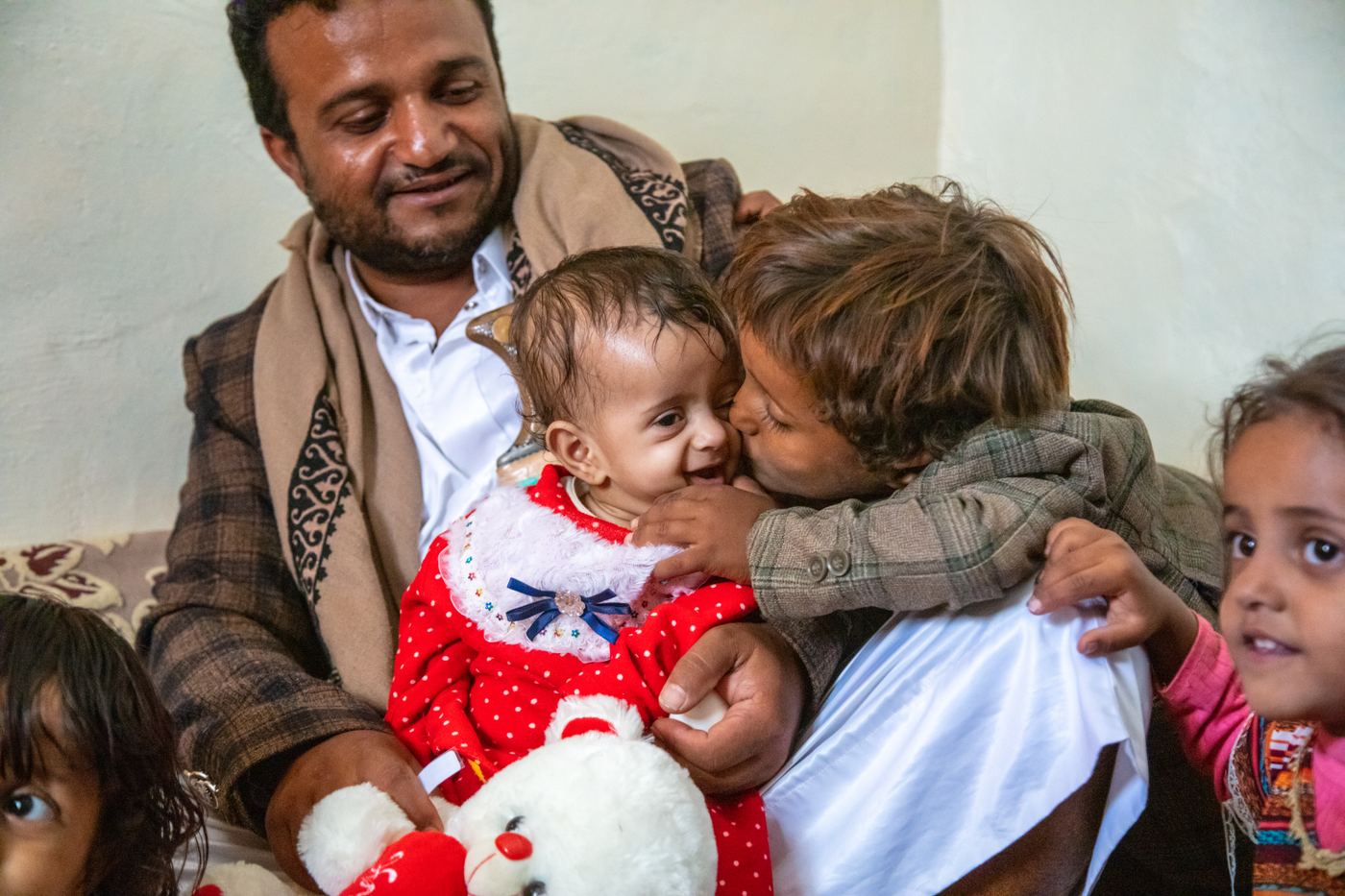
Therapeutic feeding centre, Harf Sufyan, Yemen – sustaining essential services in a protracted crisis.
Prepare
Prepare · in 2025
In 2025, the Alliance
- Advanced research on service delivery models in conflict-affected settings, including in Somalia, Ukraine and Yemen.
- Convened a learning network across 11 countries working on governance of national public health agencies, including a workshop in Addis Ababa, Ethiopia, to examine institutional models and strengthen analytical approaches.
- Supported early policy uptake in fragile settings, such as contributing to health financing and governance reforms in Yemen and Somalia.
- Featured work at the World Health Summit in Berlin, Germany, particularly as part of a keynote session on the health–peace nexus.
Highlights
This area of work focuses on two complementary initiatives: research on service delivery and systems adaptation in fragile and protracted crisis contexts, and cross-country learning on how national public health agencies can be structured to support emergency preparedness and response.
Prepare
A regional convening in Amman, Jordan, in January 2025 brought together teams working in fragile and conflict-affected settings with WHO regional offices to align research approaches and establish cross-country learning mechanisms.
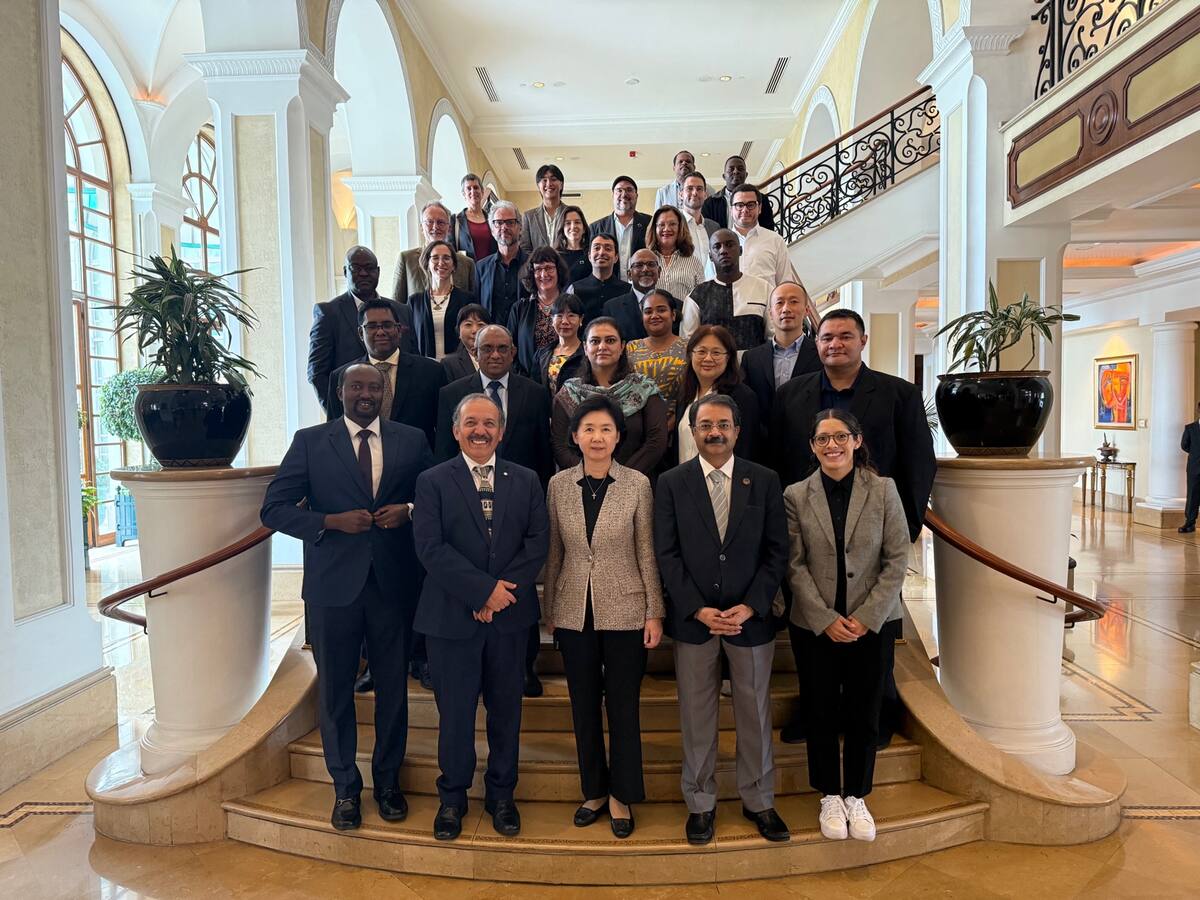
The governance initiative convened a three-day workshop in Addis Ababa, Ethiopia, in September 2025, bringing together around 30 participants from 11 countries, alongside Alliance and WHE colleagues, to strengthen analytical skills and facilitate cross-country collaboration on national public health agency models.

"Health is not simply a casualty of conflict – it can also be a bridge to peace. Strong, inclusive health systems can help divided communities to rebuild trust."
– Tedros Adhanom Ghebreyesus, Director-General, World Health Organization, at the World Health Summit 2025
Prepare
Prepare · impact dimensions
Impact dimensions
Building connections
National, regional and global convenings connected research teams with WHO regional offices, ministries of health and partner organizations, strengthening collaboration across countries facing diverse crisis contexts. A peer-learning network supports ongoing exchange on governance and service delivery models for emergency preparedness and response.
Informing policy and processes
Engagement with ministries of health in fragile and conflict-affected settings supported early use of research findings in national processes. In Yemen, Alliance-supported research contributed to the development of a primary health care financing strategy. In Somalia, findings informed coordination platforms for health governance, strengthening system-wide approaches to service delivery in crisis contexts.
06 · Align
Aligning national and regional knowledge ecosystems for evidence-informed policy-making
Building national and regional capacity for health policy and systems research, strengthening institutions and partnerships that connect evidence to policy.
© WHO/Genna Print
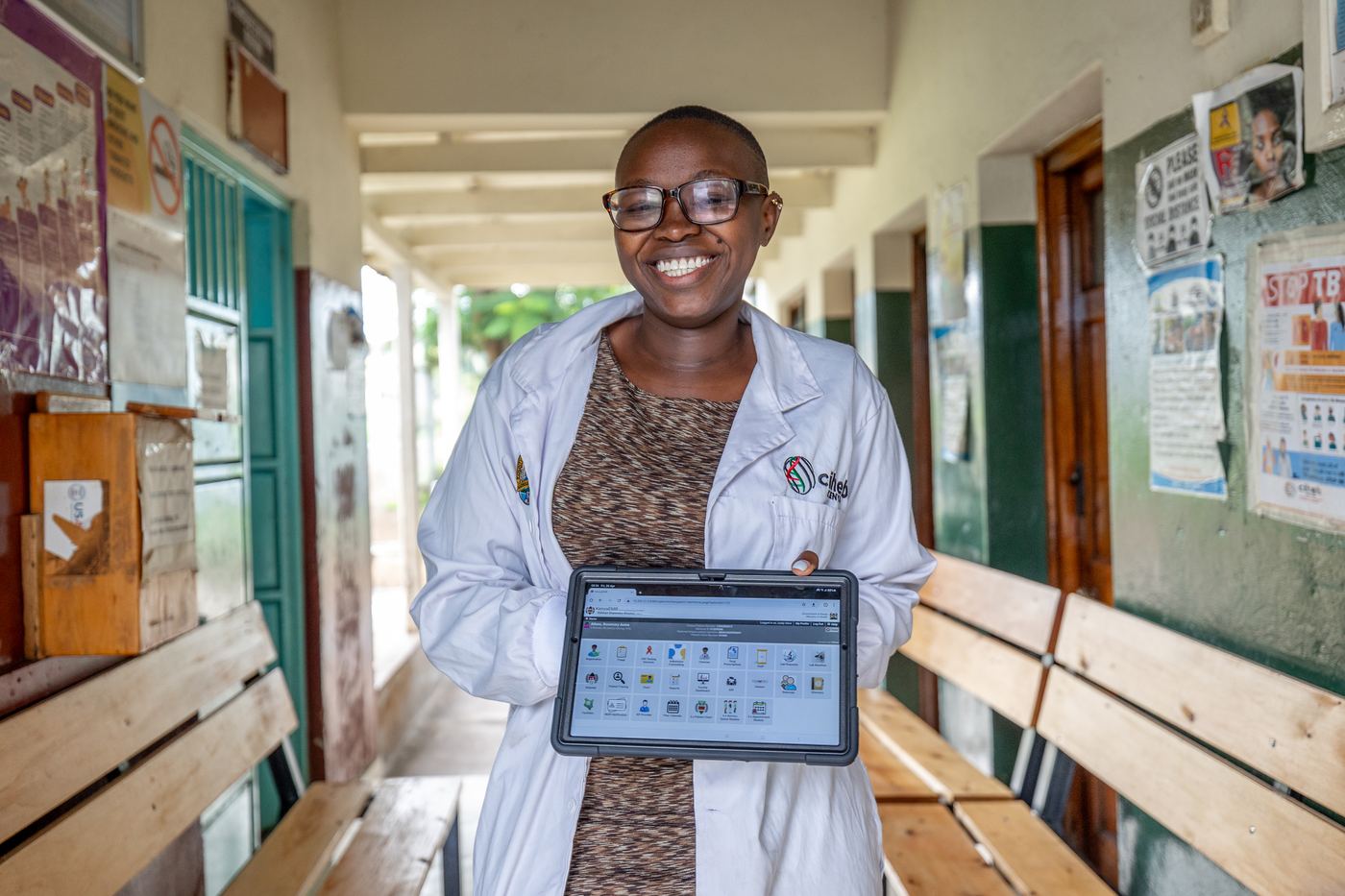
Railways Health Clinic, Kisumu County, Kenya – the digital data layer that feeds national health information systems.
Align
Align · in 2025
In 2025, the Alliance
- Advanced Partnerships for stronger knowledge systems in Africa (KNOSA) East Africa in four countries (Ethiopia, Kenya, Somalia and Uganda).
- Expanded KNOSA to West Africa with four new country teams in Benin, Burkina Faso, Guinea and Mali.
- Held a learning forum in Kampala, Uganda, bringing together subnational political officials and researchers across four countries for peer exchange.
- Documented institutional mechanisms supporting the use of evidence in policy and decision-making.
Highlights
By focusing on mechanisms that embed evidence use within institutions, the Alliance strengthened national and regional capacities for effective policy–research partnerships. KNOSA East Africa advanced the documentation of how evidence is generated, shared and used within health systems, alongside the development of knowledge products and evaluation frameworks to support institutionalization.
Country teams made context-specific progress across multiple levels of the health system. In Somalia, partnerships focused at subnational level, with researchers working closely with officials in Galmudug and Puntland states to embed research within planning processes to strengthen knowledge systems for maternal and child mortality, infectious diseases and climate-related health challenges – the first time such processes have been undertaken in the country.
Align
In Uganda, activities focused at the national level on domestic health financing, supporting collaboration between Makerere University School of Public Health and government stakeholders to strengthen how evidence informs budget and policy decisions.
In Kenya, teams worked with county governors and assemblies to institutionalize the use of evidence in decision-making, particularly to improve maternal health outcomes in Busia and Bungoma counties, while also developing evidence-informed decision-making curricula to support local use and citizen science.
In Ethiopia, the Alliance worked closely with the WHO Country Office to support the Ministry of Health's Policy, Strategy and Research Unit through secondment of staff and support to the development and roll-out of the National Health Research Priority Agenda.
KNOSA West Africa was launched in May 2025, with four country teams initiating mapping and formative reviews in Benin, Burkina Faso, Guinea and Mali, extending the KNOSA approach to new linguistic and institutional contexts.
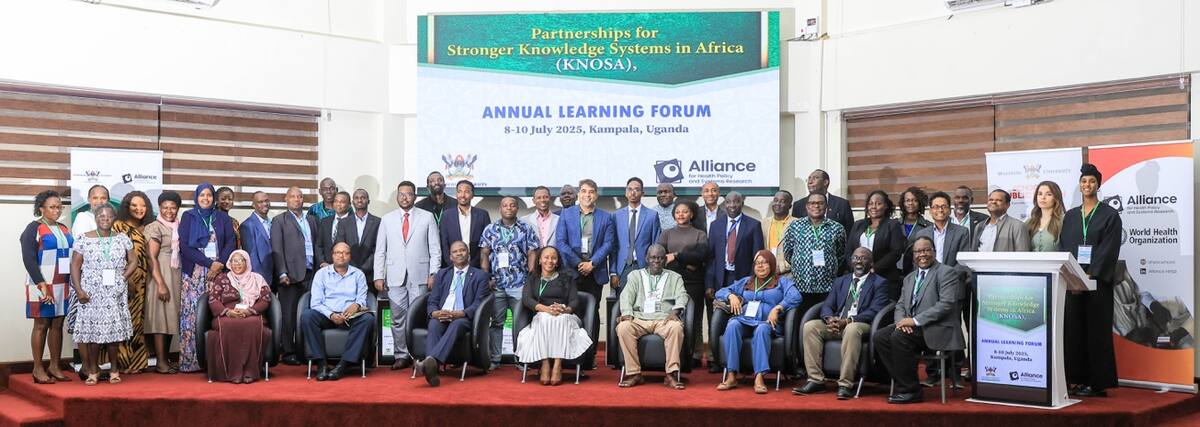
The four KNOSA East Africa country teams had their annual learning forum in Kampala, facilitating cross-country dialogue between researchers and policy-makers on institutionalizing evidence use in policy-making.
"As Africa tackles complex health and development challenges, initiatives like KNOSA highlight universities as hubs of knowledge, innovation and transformation."
– Professor Barnabas Nawangwe, Vice Chancellor, Makerere University
Align
Align · impact dimensions
Impact dimensions
Building connections
KNOSA teams strengthened partnerships between research and policy institutions within and across countries, creating sustained platforms for collaboration. Expansion into francophone West Africa extended these linkages across linguistic and institutional contexts, supporting broader regional learning and exchange.
07 · Engage
Engaging strategically
Convening forward-looking dialogue, exploring emerging technologies, and strengthening global engagement to connect research with policy and practice.
© WHO/Jeffrey Knezovich
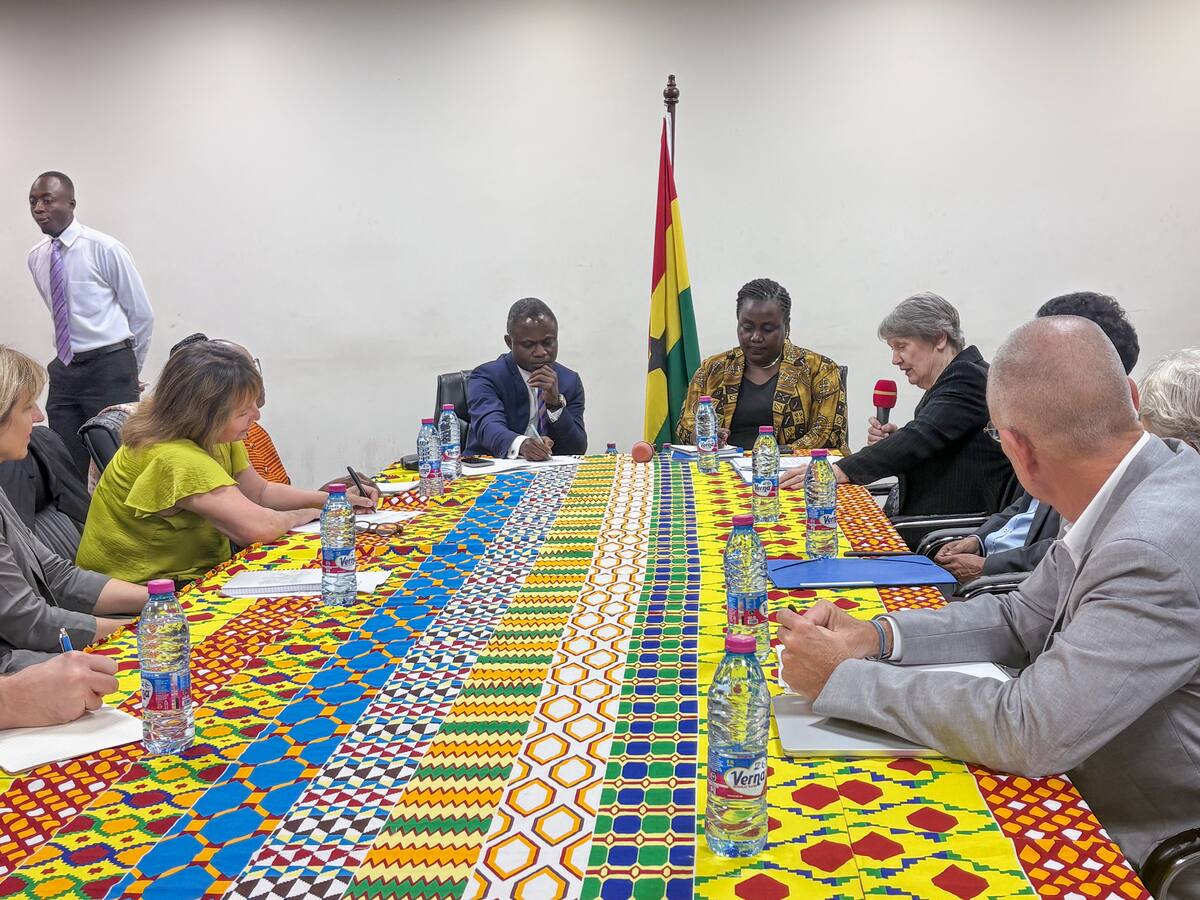
Alliance meet with Minister of Health and WHO Country Representative in Accra, Ghana – connecting research with policy at country level.
Engage
Engage · in 2025
In 2025, the Alliance
- Convened the Health Systems 2050 (HS2050) expert meeting in Accra, Ghana, exploring how global trends will reshape health systems over the next 25 years.
- Held a Policy-maker Forum in Geneva, Switzerland, with 11 policy-makers from nine countries and territories, focusing on co-creation, subnational leadership and ethical digital transformation.
- Launched an AI-powered search tool to improve access to health policy and systems research.
- Published a commentary in Nature Medicine on the evolving functions of the global health system.
- Expanded the Alliance Alumni Network to more than 400 members and launched The Alliance Lift podcast.
Highlights
The Alliance strengthened its role as a convenor of forward-looking dialogue on the future of health systems, bringing together researchers, policy-makers and practitioners to explore emerging challenges and opportunities.
The Health Systems 2050 initiative advanced a scoping review and global consultation on trends shaping health systems, including demographic change, technological innovation and shifting geopolitical dynamics. The expert meeting in Accra, Ghana, brought together global thought leaders for three days of structured dialogue on how these trends will influence the design and governance of future health systems.
Engage
In parallel, the Alliance explored the responsible and equitable use of emerging technologies. An in-person consultation on AI for health policy and systems research in Montreux, Switzerland brought together experts to discuss how AI can be responsibly and equitably integrated into HPSR, particularly in low- and middle-income country settings. A key milestone was the launch of an AI-powered search tool, enabling users to search the Alliance's open-access evidence base more effectively. Work also began on a series of State of HPSR papers addressing frontier topics, new methods and pathways for impact.
"Systematic reviews were created to correct bias. If you just ask ChatGPT to summarize ten studies, the result isn't reliable, because not all studies have the same weight. AI must be integrated responsibly."
– Gabriel Rada, at the Alliance consultation on AI for HPSR
The Policy-maker Forum in Geneva provided a structured platform for peer exchange among senior decision-makers, focusing on co-creation, subnational leadership and ethical digital transformation. This was complemented by the continued growth of the Alliance Alumni Network, the launch of The Alliance Lift podcast and a commentary in Nature Medicine considering how the functions of the global health system need to evolve.
Engage · impact dimensions
Building connections
These initiatives strengthened collaboration across research, policy and practice. The Policy-maker Forum continues to bring together a network of senior decision-makers committed to peer learning, while the HS2050 meeting in Accra convened global expertise on future health system challenges. Across activities, the Alliance created platforms for ongoing exchange on emerging priorities, including digital transformation and systems thinking.
Donors and governing bodies
Donors and governing bodies
Donors
Core funding partners
The Alliance's work is made possible through sustained financial partnerships with:
- Norwegian Agency for Development Cooperation (Norad), and
- Swedish International Development Cooperation Agency (Sida).
Additional funders and partners
Extending the reach of our work:
- Gates Foundation,
- Gavi, the Vaccine Alliance,
- Federal Republic of Germany,
- National Institute for Health and Care Research, supported by the Department of Health and Social Care, United Kingdom of Great Britain and Northern Ireland,
- Robert Wood Johnson Foundation, and
- Wellcome Trust.
Governing bodies
Donors and governing bodies
Governing bodies
The Alliance is overseen by a Board and Scientific and Technical Advisory Committee who ensure accountability, quality and alignment of the Alliance with global and national health priorities. During 2025, the Board provided oversight of strategic implementation, financial stewardship, and the refresh of our monitoring and evaluation framework.
Our headquarters are in Geneva, with the Secretariat serving as the operational hub for coordinating research partnerships, managing relationships with funders, and connecting evidence to policy globally. The Alliance is grateful to WHO for providing institutional home and infrastructure support.
Alliance Board
- ChairHelen Clark, Former Prime Minister, New Zealand
- Vice ChairJeanette Vega, Former Minister of Social Development and Family, Chile
- Sylvie Briand, Chief Scientist, World Health Organization, Switzerland
- Jeremy Farrar, Chief Scientist, World Health Organization, Switzerland
- Rubayat Khan, Director, Health Programs, Endless Network, United States of America
- Gabriel Leung, Executive Director (Charities and Community), Hong Kong Jockey Club, China, Hong Kong SAR
- Matshidiso Moeti, Former Regional Director for Africa, World Health Organization, Botswana
- Anders Nordström, Former Ambassador for Global Health, Ministry of Foreign Affairs, Sweden
- Ingvar Theo Olsen, Policy Director, Department for Global Health, Education and Research, Norwegian Agency for Development, Norway
- Eren Zink, Senior Research Advisor, Swedish International Development Cooperation Agency, Sweden
Governing bodies
Scientific and Technical Advisory Committee
- ChairHelen Schneider, Professor, School of Public Health, University of the Western Cape, South Africa
- Octavio Gómez Dantés, Senior Researcher, Center for Health Systems Research, National Institute of Public Health of Mexico, Mexico
- Karen Grépin, Associate Professor, School of Public Health, University of Hong Kong, China, Hong Kong SAR
- J. Jaime Miranda, Professor and Head of Sydney School of Public Health, University of Sydney, Australia; Research Associate, CRONICAS Center of Excellence in Chronic Diseases, Universidad Peruana Cayetano Heredia, Peru
- Sudha Ramani, Independent Consultant, Health Policy and Systems Research, Mumbai, India
- Amirhossein Takian, Professor and Founding Director, Center of Excellence for Global Health, School of Public Health, Tehran University of Medical Sciences, Islamic Republic of Iran
- Benjamin Tsofa, Senior Principal Research Scientist – Health Policy and System Research, KEMRI-Wellcome Trust Research Programme / KEMRI Centre for Geographic Medicine Research, Kenya
Alliance Secretariat
- Kumanan Rasanathan, Executive Director
- Samuel Boland, Scientist
- Luzviminda Diaz Caguioa, Team Assistant
- Ana Lorena Guerrero Torres, Technical Officer
- Anne-line Nippierd Imbsen, Team Assistant
- Mayya Khin, Team Assistant
- Jeffrey Knezovich, Technical Officer
- Aku Kwamie, Technical Officer
- Giulia Loffreda, Scientist
- Robert Marten, Strategy and Partnership Officer
- Daniela C. Rodríguez, Scientist
- Idil Shekh Mohamed, Technical Officer
- Zubin Shroff, Technical Officer
- Kanika Sokchea, Administrative Officer
- Amirhossein Takian, Senior Scientist
- John Warriner, Technical Officer
- Yasmine Yahoum, Team Assistant
People listed in this section served on the Board or Scientific and Technical Advisory Committee or were staff members employed by the Secretariat at some point during 2025. Roles and affiliations shown reflect each person's position at the time of their service with the Alliance and do not necessarily reflect their current role or the current composition of these bodies.
Alliance for Health Policy
and Systems Research World Health Organization
20 Avenue Appia
1211 Geneva, Switzerland
alliancehpsr@who.int
ahpsr.who.int
and Systems Research World Health Organization
20 Avenue Appia
1211 Geneva, Switzerland
alliancehpsr@who.int
ahpsr.who.int
Copyright and licensing
Alliance for Health Policy and Systems Research: annual report 2025
ISBN 978-92-4-012306-9 (electronic version)
ISBN 978-92-4-012307-6 (print version)
© World Health Organization 2026
(acting as the host organization for, and secretariat of, the Alliance for Health Policy and Systems Research)
Some rights reserved. This work is available under the Creative Commons Attribution-NonCommercial-ShareAlike 3.0 IGO licence (CC BY-NC-SA 3.0 IGO; https://creativecommons.org/licenses/by-nc-sa/3.0/igo).
Under the terms of this licence, you may copy, redistribute and adapt the work for non-commercial purposes, provided the work is appropriately cited, as indicated below. In any use of this work, there should be no suggestion that WHO endorses any specific organization, products or services. The use of the WHO logo is not permitted. If you adapt the work, then you must license your work under the same or equivalent Creative Commons licence. If you create a translation of this work, you should add the following disclaimer along with the suggested citation: "This translation was not created by the World Health Organization (WHO). WHO is not responsible for the content or accuracy of this translation. The original English edition shall be the binding and authentic edition".
Any mediation relating to disputes arising under the licence shall be conducted in accordance with the mediation rules of the World Intellectual Property Organization (http://www.wipo.int/amc/en/mediation/rules/).
Suggested citation. Alliance for Health Policy and Systems Research: annual report 2025. Geneva: World Health Organization; 2026. Licence: CC BY-NC-SA 3.0 IGO.
Cataloguing-in-Publication (CIP) data. CIP data are available at https://iris.who.int/.
Sales, rights and licensing. To purchase WHO publications, see https://www.who.int/publications/book-orders. To submit requests for commercial use and queries on rights and licensing, see https://www.who.int/copyright.
Third-party materials. If you wish to reuse material from this work that is attributed to a third party, such as tables, figures or images, it is your responsibility to determine whether permission is needed for that reuse and to obtain permission from the copyright holder. The risk of claims resulting from infringement of any third-party-owned component in the work rests solely with the user.
General disclaimers. The designations employed and the presentation of the material in this publication do not imply the expression of any opinion whatsoever on the part of WHO concerning the legal status of any country, territory, city or area or of its authorities, or concerning the delimitation of its frontiers or boundaries. Dotted and dashed lines on maps represent approximate border lines for which there may not yet be full agreement.
The mention of specific companies or of certain manufacturers' products does not imply that they are endorsed or recommended by WHO in preference to others of a similar nature that are not mentioned. Errors and omissions excepted, the names of proprietary products are distinguished by initial capital letters.
All reasonable precautions have been taken by WHO to verify the information contained in this publication. However, the published material is being distributed without warranty of any kind, either expressed or implied. The responsibility for the interpretation and use of the material lies with the reader. In no event shall WHO be liable for damages arising from its use.
Photo credits and captions
All photographs used in this report, with full credits and captions. Photographs are owned by their respective copyright holders, used under WHO and partner agreements.
- Cover. Joint malaria-vaccine and bed-net delivery, Ethiopia — primary health care and immunization, central to Alliance research. © WHO/Selamawit
- Stories of change opener. Vaccinators during Pakistan's national polio campaign. See the MAINSTREAM story for new evidence on embedded research for immunization, including findings from Pakistan. © WHO
- Transform · chapter opener. Oral cholera vaccination campaign, Blantyre District, Malawi – community-delivered primary health care at work. © WHO/Nathalie Ridgard
- Harness · chapter opener. Phone-based ultrasound at a mobile outreach, Samburu County, Kenya – digital tools extending primary care to the last mile. © WHO/Genna Print
- Prevent · chapter opener. Women's Integrated Cancer Services, Kenya – a single visit combining cancer screening with noncommunicable disease and mental-health checks. © WHO
- Strengthen · chapter opener. Floodwaters near Chókwè Rural Hospital, Mozambique – climate shocks are already straining frontline facilities. © WHO
- Prepare · chapter opener. Therapeutic feeding centre, Harf Sufyan, Yemen – sustaining essential services in a protracted crisis. © WHO/Ameen AL-Ghabri
- Align · chapter opener. Railways Health Clinic, Kisumu County, Kenya – the digital data layer that feeds national health information systems. © WHO/Genna Print
- Engage · chapter opener. Alliance meeting with Minister of Health and WHO Country Representative in Accra, Ghana – connecting research with policy. © WHO/Jeffrey Knezovich
- Harness · inline figure. An Alliance-convened session at the Global Digital Health Forum in Nairobi, Kenya, bringing together regional policy-makers and international stakeholders on digital health governance and implementation. © Global Digital Health Forum
- Prevent · inline figure. Distinguished panel at the World Health Assembly side event on health taxes in Geneva in May, including government representatives from Ghana, the Philippines, Thailand and Tonga. © WHO/Jeffrey Knezovich
- Prepare · inline figure. Participants from a range of national public health agencies convened in Addis Ababa, Ethiopia, to share lessons on governance arrangements. © WHO
- Prepare · inline figure. Keynote session on the health–peace nexus at the World Health Summit 2025 in Berlin, Germany, where Alliance-supported research on fragile and conflict-affected settings informed the policy dialogue. © World Health Summit
- Align · inline figure. The KNOSA East Africa annual learning forum, held in Kampala, Uganda in June 2025 with Makerere University School of Public Health, brought together research and policy partners from four countries for three days of peer exchange and practical learning. © Makerere University