The complexity of decision-making requires inputs from a broad knowledge base that includes evidence generated from research, best practices, local evidence, as well as tacit knowledge. Recent evidence suggests that the most common resources consulted by policy- and decision-makers are reports, briefing notes, evaluations, journal articles, discussion papers and research reviews. Some of this evidence is published in peer-reviewed journals but a lot of it is confined to grey documents and not shared more broadly. As a result, the knowledge generated from these experiences is not optimized by decision makers, researchers, and other stakeholders in the development of policies and programmes.
While one-stop shops and databases such as PubMed are useful in indexing peer reviewed articles, grey literature remains difficult to identify and access, although it provides useful information for policy decisions. In addition to difficulties in accessing knowledge, lack of timeliness or relevance of findings remain important barriers to the use of evidence in health policy and practice.
Given this reality, the World Health Organization (WHO) Strategy on Health Policy and Systems Research (HPSR) entitled “Changing Mindsets” (2012) suggested to synthesize and consolidate relevant research evidence as well as other knowledge via national repositories of evaluations, best practices, and grey literature established within countries, to enable greater access to existing knowledge that could improve decision-making.
Consequently, the Alliance is developing a pilot repository entitled “Policy Information Platform” (PIP) in order to alleviate access barriers to the existing policy-relevant knowledge covering both indexed publications and grey literature, as well as to ensure that relevant and reliable information is available in a user-friendly format for policy and management decisions. The Policy Information Platform represents a policy-relevant repository developed at national and state level, collating black (indexed) and grey literature while prioritising local knowledge and contextual evidence, to ensure its relevance to real world decision-making.
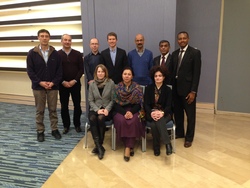
In order to inform the best way forward for the Policy Information Platform, the Alliance convened an Expert Consultation in Istanbul (Turkey) in January 2015, which developed a PIP framework and established a theory of change for this programme of work.
The Policy Information Platform is developed as a user-friendly resource, providing evidence to bridge the knowledge-to-action gap at every step of policy- and decision-making processes, for instance assessing potential policy options or identifying implementation barriers. By collating in a single repository different types of evidence with a strong focus on contextualised findings, the platform aims at fostering the use of relevant knowledge by those managing and working in complex health systems and routinely making decisions regarding strategies to improve health care and promote equity.
For more information, contact Etienne Langlois (langloise@who.int)