
The Alliance provides grants to research institutions in low and middle-income countries to undertake health policy and systems. In this section, a previous and/or existing Grantee shares their experience.
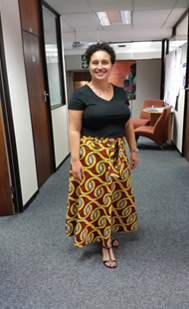
Karen Daniels is a social scientist working in the field of public health research. She regards herself as an activist at heart and considers research another site of social activism. She started out as a qualitative researcher after training in English and History, but her interest in health led her to an MPH (UCT) and a Dr.PH (NHV). She has gained a wide range of experience within the field of health policy and systems research working on projects focused on infectious diseases, human resource solutions, evidence use in policy, gender and policy, and policy implementation.
Currently, she leads the South African Initiative for Systematic Reviews on Health Policies and Systems (SAI). Daniels is also the lead investigator for a review on incentives for lay health workers, and a co-investigator and post graduate supervisor on several qualitative studies.
Daniels shares her experience with the Alliance below.
What are you currently working on?
I work in the Health Systems Research Unit at the South African Medical Research Council, and within my unit I have been involved in a range of projects, many related to conducting systematic reviews supported by the Alliance. Systematic reviews integrate the results of several primary studies in a concise and user-friendly format. Usually the review also grades the strength of the evidence presented in the respective primary studies. At present, we are conducting 4 systematic reviews focusing on access to medicines, routine health information system interventions, mhealth and contracting out services.
In your experience, what are the barriers for evidence uptake in your work?
What often prohibits the uptake of research is not that there is a lack of evidence. Instead, contextual factors, such as political choices, the availability of resources affect the use of evidence. How evidence is presented, received and integrated into policy formulation and implementation, makes a huge difference!. I realised that research needs to inform all stages of the policy making process. This means regular engagement with policy makers.
Through the Alliance's support more than 20 scientific articles have been published, most of them indexed in PUBMED. Also an Operational Manual for Strengthening Institutional Capacity to Employ Evidence in Health Policymaking for Developing Countries: The Nigeria Experience was developed.
What is the benefit of being an Alliance grantee?
The Alliance's innovative tools and models for conducting embedded research have been extremely helpful. As a requirement for qualifying for an Alliance grant, our reviews needed to be developed in consultation with policy makers so that it is relevant and responsive to their needs. In the past we may have tried to “sell” or broker the evidence once the reviews were complete. Now, we engage with policy makers even before we start each review. This means asking them whether pursuing a particular question is of value, and whether once the work is completed, if the findings will be used to inform implementation. Engaging policymakers in the research process has become second nature; it is embedded in many of our projects. Because of this success, we want to expand our engagement with national policy makers.
Coupled with these interventions, in 2015 an exchange programme was established between the Ebonyi State University and the Ministry of Health (MOH) through the support of TDR, the Special Programme for Research and Training in Tropical Diseases. This programme enables researchers to spend time in the MOH and policy makers at the university.
“All of these interventions are aimed at ensuring that health systems research is rooted in policy making. To do this we needed to create linkages between researchers and policy makers as well as strengthen their capacity in HPSR. The progress we have achieved is possible due to the participative leadership and cordial working relationships and trust that exist between the researchers and the policymakers”, said Uneke.
As a grantee, what advice would you give other researchers?
As an Alliance grantee, I have learnt to see the funder as a partner rather than as a patron. This is important as we learn to work together to further our common goals, particularly in building our community. Health policy and systems research is very much an applied science. Therefore, our offices may be in universities or research institutions, but our work really is within the health system. We need to be engaged actors within our contexts; talking to NGOs, meeting with implementers, knocking on the doors of policy makers. Policy and implementation processes are messy, and we need to be in the middle of the mess, being part of the wide network of actors finding a pathway through it; rather than being passive observers on the outside.